
 Sep 9, 2026
A Complete Guide to Investing on the Iraq Stock Exchange
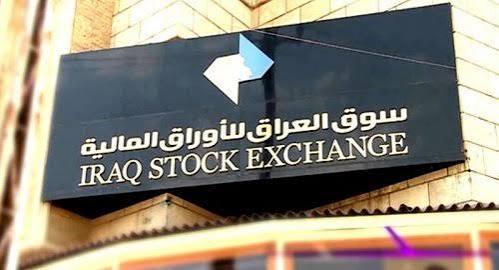
The Iraq Stock Exchange (ISX) is the primary securities market in Iraq, offering retail and institutional investors access to approximately 125 listed companies across the Main, Second, Third, and Over-the-Counter (OTC) markets. Trading takes place five days a week, from Sunday to Thursday, with a Pre-Open session beginning at 9:30 AM followed by Continuous Open Trading until 1:00 PM. Before you can begin trading, you must select a brokerage firm licensed by the Iraqi Securities Commission (ISC). It is advisable to compare firms based on the quality of their electronic trading platforms, the efficiency of their technical support, and whether they provide financial research and analysis reports. Once you have selected a broker, the next step is to open an investment account by submitting the required documentation to obtain your unique Investor Number. Individual Iraqi investors will need a valid National ID Card, an official Residence Card, a recent personal photograph, and a completed and signed Know Your Customer (KYC) form. Companies and other entities must instead provide a Certificate of Incorporation from the Companies Registration Department, Articles and Memorandum of Association, Board Meeting Minutes authorizing the account opening, and identification documents for the designated trader. Non-Iraqi investors, whether individuals or entities, must provide a valid passport, proof of address, a completed KYC form through a licensed broker, and must open an in-country Iraqi bank account to process trading transfers. After your account is opened, you will need to open a bank account with an approved partner bank and deposit capital to fund your trading balance. There is no statutory minimum initial deposit required by the exchange itself, though individual brokers may set a nominal starting balance. With your account funded, the next step is to define your investment strategy. Investors typically allocate between dividend-yielding stocks, such as established banks and telecommunications companies, and growth stocks, which are under-priced equities with higher upside potential. Historically, the Banking sector has dominated the exchange with the largest capital and the highest number of listed shares, followed by Telecommunications, Industry, Hotels and Tourism, Agriculture, Services, Financial Services, Investment, and Insurance. The exchange also tracks two benchmark indices. The ISX60 Index is calculated using the free-float market capitalization of 60 active listed companies and reflects broad market movements. The ISX15 Index tracks only the top 15 blue-chip, highly liquid companies and serves as a benchmark for premium equity performance. Many listed Iraqi companies, particularly leading banks and telecommunications firms, offer attractive cash dividend yields, historically ranging between 6% and 12% annually relative to corporate capital. Following approval at a company's General Assembly meeting, dividend payments are typically distributed within 30 to 60 days via check or direct bank transfer. Shareholders must update their share certificates through the issuer to collect these distributions. Under Iraqi tax law, all investors, whether individual, corporate, domestic, or foreign, are fully exempt from capital gains tax on share trading, making the exchange an attractive destination for long-term capital growth. There are also no legal restrictions preventing foreign investors from repatriating capital gains or dividend yields, as Iraqi investment laws guarantee the right to transfer funds abroad through officially authorized banking channels. That said, not all listed companies generate profits. Financial performance varies significantly based on management efficiency, sector dynamics, and broader economic conditions, and loss risk is inherent to equity markets. Investors are encouraged to diversify their holdings across multiple sectors rather than concentrating capital in a single distressed company, since this reduces the risk of total capital loss. Quarterly and annual financial disclosures for listed companies are made available through the official ISX portal under the Disclosures section, as well as through the corporate websites of the listed entities themselves. The Iraqi Securities Commission (ISC) is the independent regulatory body overseeing market operations, protecting investor rights, licensing brokerage firms, and monitoring corporate disclosures across the exchange. Minority shareholder rights are protected under Companies Law No. 21 of 1997, including cumulative voting rights, the ability to contest General Assembly decisions in court, and the right to request financial register audits under certain shareholding thresholds. Companies seeking to list on the exchange must meet minimum capital thresholds, submit audited financial statements for at least the preceding two fiscal years, and satisfy minimum public float distribution requirements. Beyond direct equity trading, alternative investment instruments remain limited on the exchange. Government bond issuances are infrequent, and mutual funds are not currently available within the market structure. Investors can monitor market activity and place orders remotely using mobile and web-based trading platforms offered by major licensed brokerage firms, which removes the need to visit a physical branch for every transaction. There are no strict minimum capital requirements for opening a trading account, which makes the exchange broadly accessible to retail investors with modest starting capital. As political and economic stability in Iraq continues to improve, listed equities are seen by many analysts as offering strong long-term upside potential for capital appreciation in addition to their existing dividend yields. Understanding trading commissions is also essential: the total trading commission across most transactions is approximately 0.6% of the transaction value, which should be factored into any short-term trading strategy. New investors are strongly encouraged to research a company's fundamentals, sector positioning, and dividend history before committing capital, rather than relying solely on short-term price movements. This course has covered the essentials of account opening, market structure, indices, dividends, taxation, regulation, and risk management needed to begin investing on the Iraq Stock Exchange with confidence.